2026.03.04
Story#JomonFlame-shaped
Encounter Tsunan’s Vast Accumulation of History and Culture at “Umorea”
TextTaiki Honma
2026.03.04
Story#JomonFlame-shaped
TextTaiki Honma
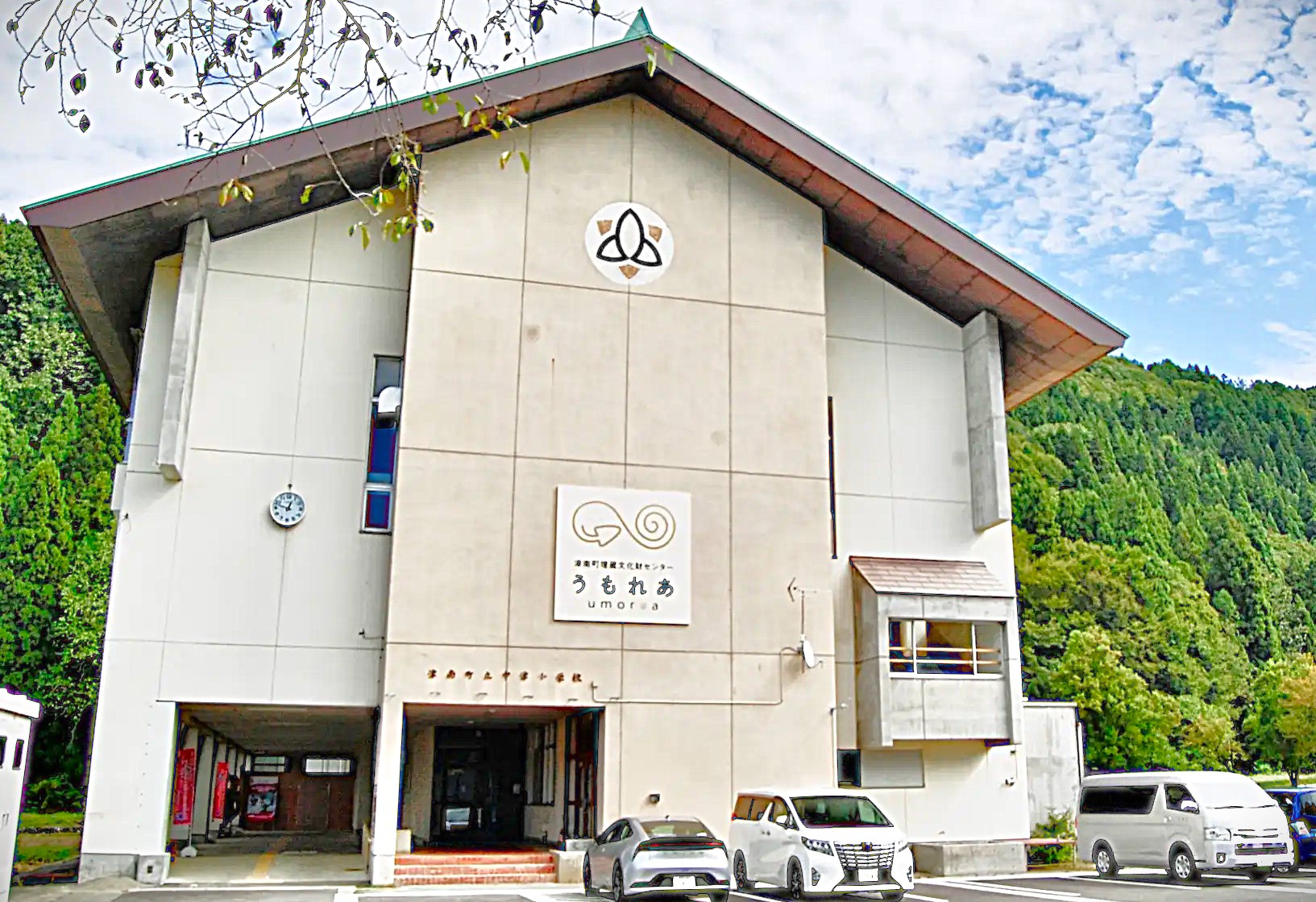
Tsunan is a place where archaeological sites from the Paleolithic, Jomon, and Yayoi periods have been unearthed in abundance. In October 2025, the Buried Cultural Properties Center “Umorea” opened in the town to store and exhibit these finds. Housed in the former Nakatsu Elementary School building, the facility displays approximately 2,200 artifacts including pottery, and preserves over 30,000 related publications. Let us introduce this new destination where visitors can trace the region’s timeless history and culture.
From National Route 117, take National Route 405 along the Nakatsu River toward Akiyamago. About five minutes by car, a large triangular-roofed building comes into view on the left—this is the Tsunan Town Buried Cultural Properties Center “Umorea.” The Nakatsu Elementary School closed in 2015, and its former building has been repurposed for this facility.
A buried cultural properties center is a public institution that excavates, researches, stores, and exhibits the buried cultural properties of a region, operated by prefectural or municipal governments. There are said to be 400 to 500 such centers across Japan, ranging from large to small.
Sato Nobuyuki, a cultural properties specialist at the Tsunan Town Board of Education, speaks passionately: “As you may know, Tsunan is a region rich in archaeological sites and buried artifacts from every era. From the Paleolithic period roughly 30,000 years ago, through the Jomon and Yayoi periods, and on to the medieval and early modern eras—we have gathered artifacts and materials unearthed in this town all in one place. We take pride in the fact that, despite being a municipally operated facility, we have a breadth of collections and exhibitions that rivals a comprehensive museum.”
Incidentally, the name “Umorea” was coined by combining “umorete iru” (buried) cultural properties with “Real” and “Rare.” “The name embodies our wish for people to learn about precious buried cultural properties in a real, tangible way, and to apply that experience to the present,” says Sato-san. True to its name, almost everything on display is the real thing, and photography is permitted. Visitors can feel the accumulated history of this region firsthand through numerous genuine artifacts and learn from them thoroughly. And to top it off, admission is free.
Upon entering from the first-floor entrance, a library can be found at the back. “We store materials donated by various municipalities and individual researchers. While the collection consists mainly of specialized books on the history and folklore of Tsunan Town, we are currently creating a catalog, and once that work is complete, everything will be available for browsing,” explains Sato-san.
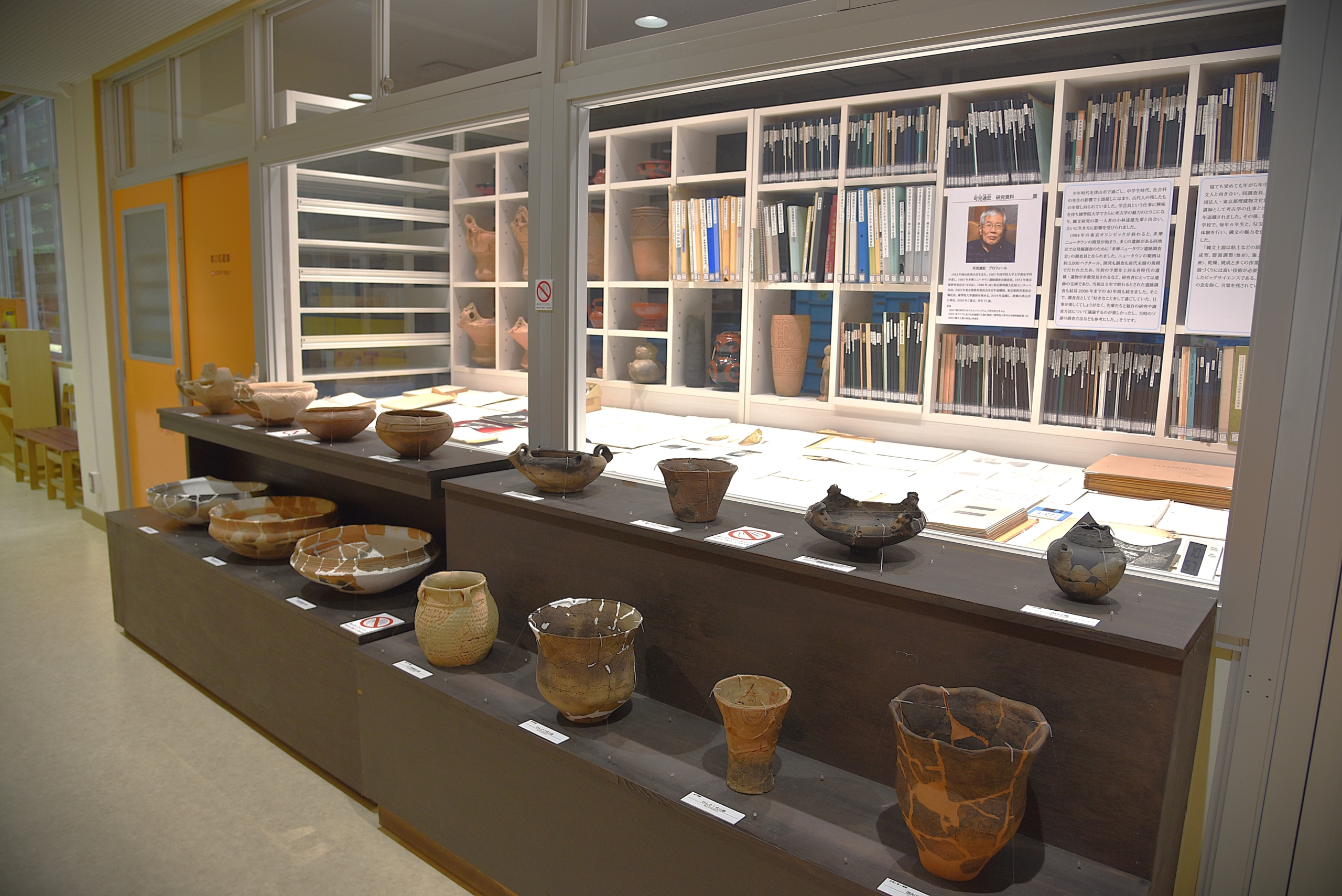
Behind a glass display case where Jomon pottery is lined up in a row lie the research materials of Kani Michihiro, a leading authority on Jomon pottery research. In a further room beyond, numerous books await cataloging. “We have assembled a wide range of books and materials that can engage everyone from complete beginners in archaeology to university students and researchers,” says Sato-san proudly.
Climbing the stairs to the second floor, visitors find three rooms dedicated to the Incipient, Middle, and Late Jomon periods, each displaying pottery, stone tools, and other buried artifacts from their respective eras.
The Jomon period spans an immensely long stretch of time—roughly 13,000 years, from about 16,000 years ago to about 3,000 years ago. Sandwiched between the Paleolithic and Yayoi periods, this era is characterized by the use of pottery and polished stone tools, a lifestyle centered on hunting and gathering, and settled communities.
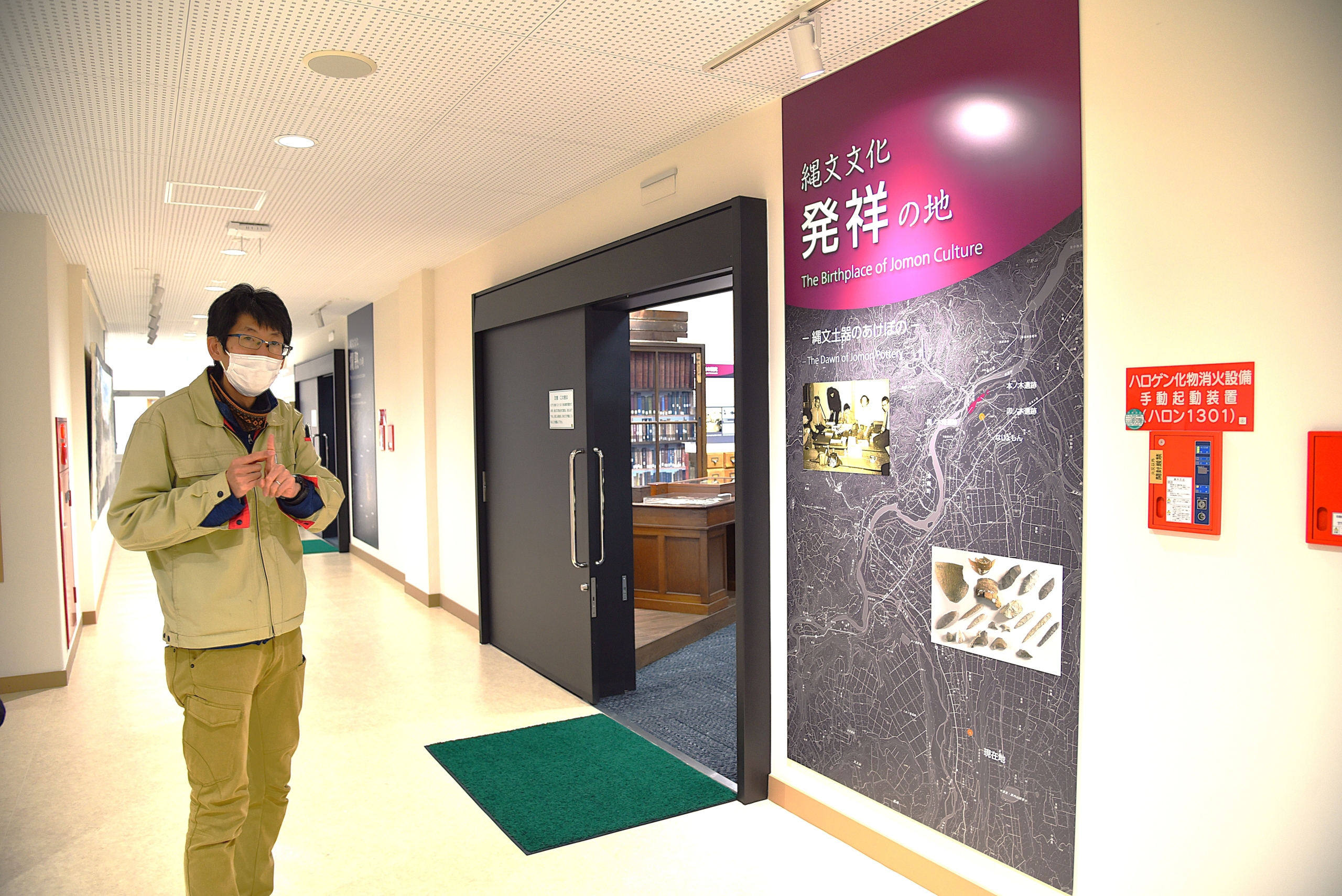
The first room entered is Exhibition Room 1, covering the Incipient Jomon period. The first thing that catches the eye is the large collection of artifacts from the Motonoki Site, designated as a National Important Tangible Cultural Property. Numerous stone points of various shapes and sizes—crafted by chipping stone—are displayed alongside pottery fragments and vessels called “pressed cord-marked pottery” from the Incipient Jomon period.
Sato-san explains: “The excavation of the Motonoki Site sparked a controversy that swept through the academic world—the question of whether these pressed cord-marked pottery pieces and the stone points found alongside them were from the same period, or from different time periods.”
Serizawa Chosuke, who conducted the first survey in 1956, argued that the stone points belonged to the pre-ceramic era and that the pressed cord-marked pottery was a later intrusion. In contrast, Yamanouchi Sugao, who conducted the second survey, maintained that the two coexisted in the same period, sparking a heated debate.
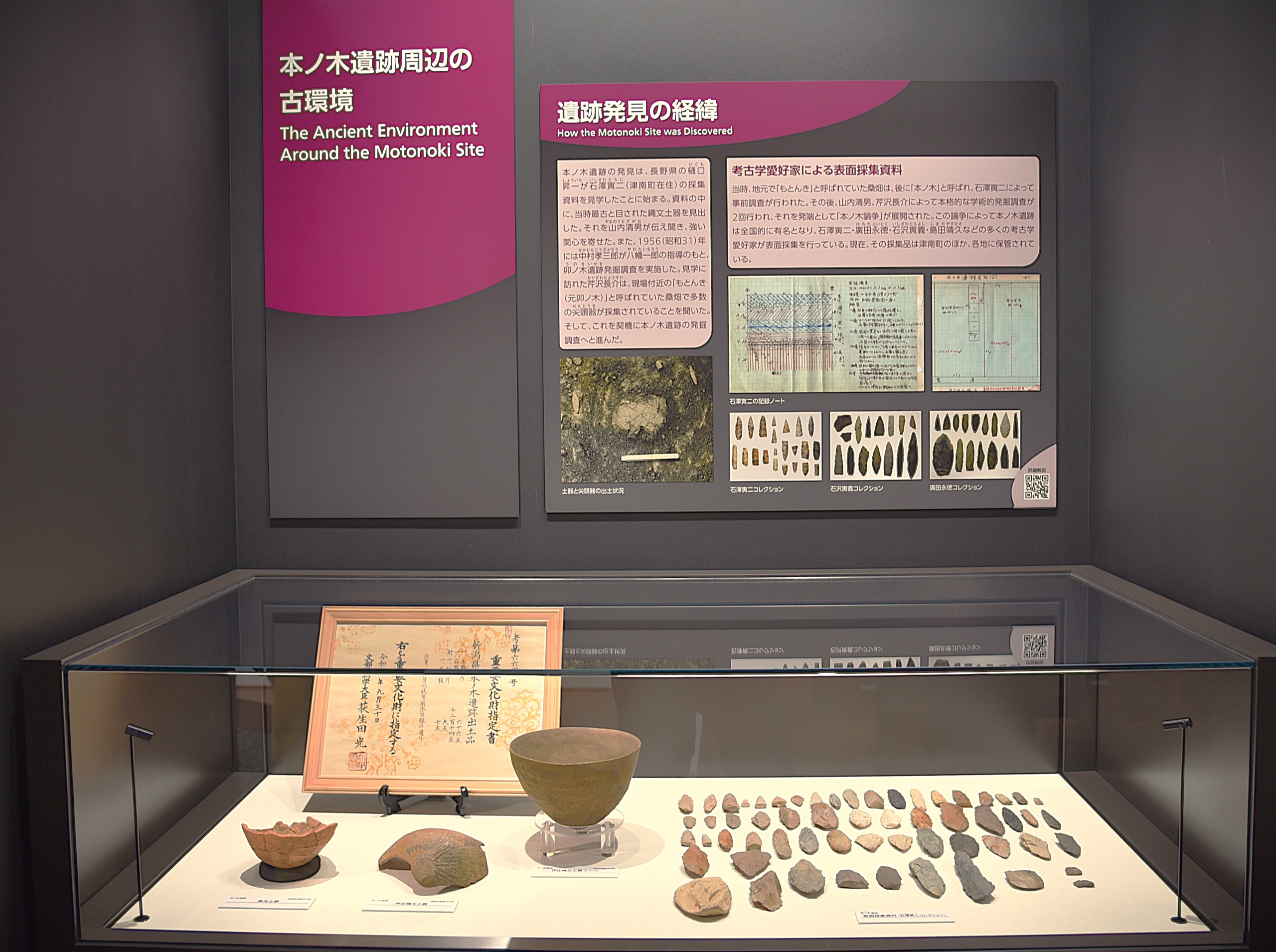
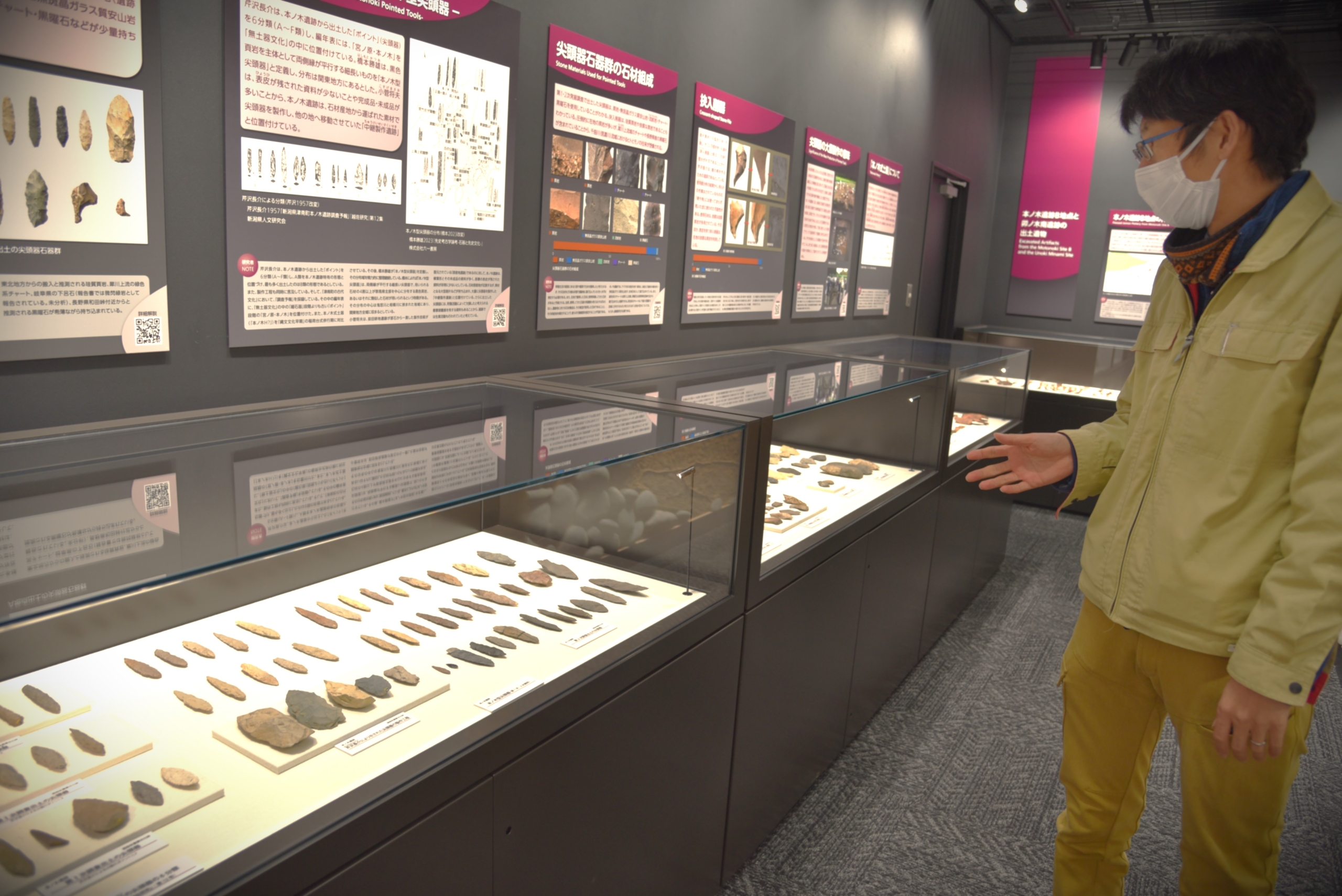
Excavation and research have continued since then, and the debate persists to this day. “In any case, there is no doubt that the artifacts from the Motonoki Site constitute an extremely valuable and rare collection documenting the transition from the late Paleolithic to the Incipient Jomon period. They were designated as National Important Cultural Properties in October 2019,” emphasizes Sato-san.
The beginning of the Jomon period and its mysteries are posed directly to us through the existence of these buried artifacts before our eyes. Gazing at the lined-up stone points, one feels as though they are quietly whispering their truths across the vastness of time.
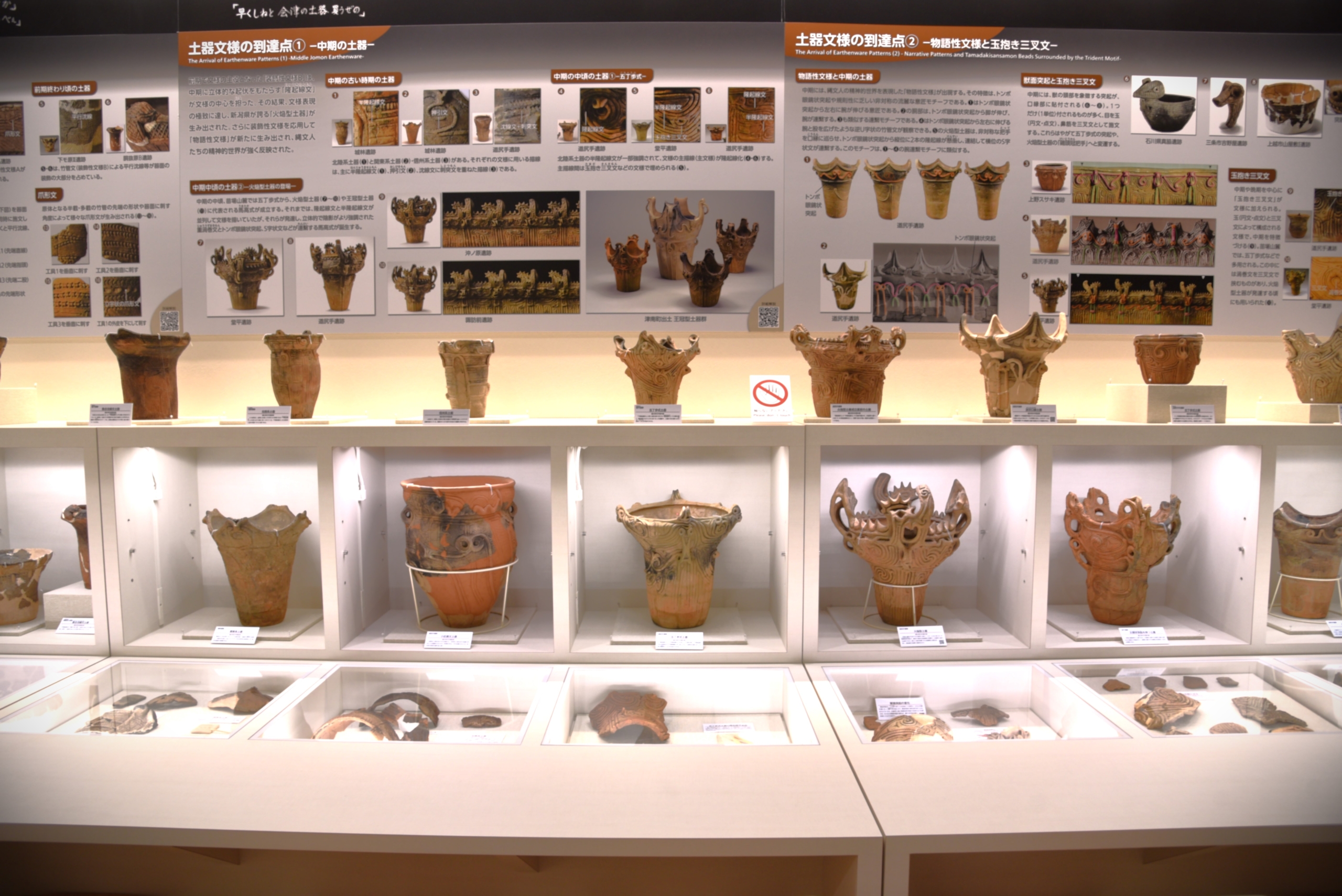
Exhibition Room 2 covers the Middle Jomon period, and upon stepping inside, the striking form of the famous flame-style pottery (kaen-gata doki) immediately catches the eye. The artist Okamoto Taro is said to have exclaimed “What on earth is this!” upon seeing these vessels. The flame-like decorations adorning the rim clearly set them apart from all other Jomon pottery.
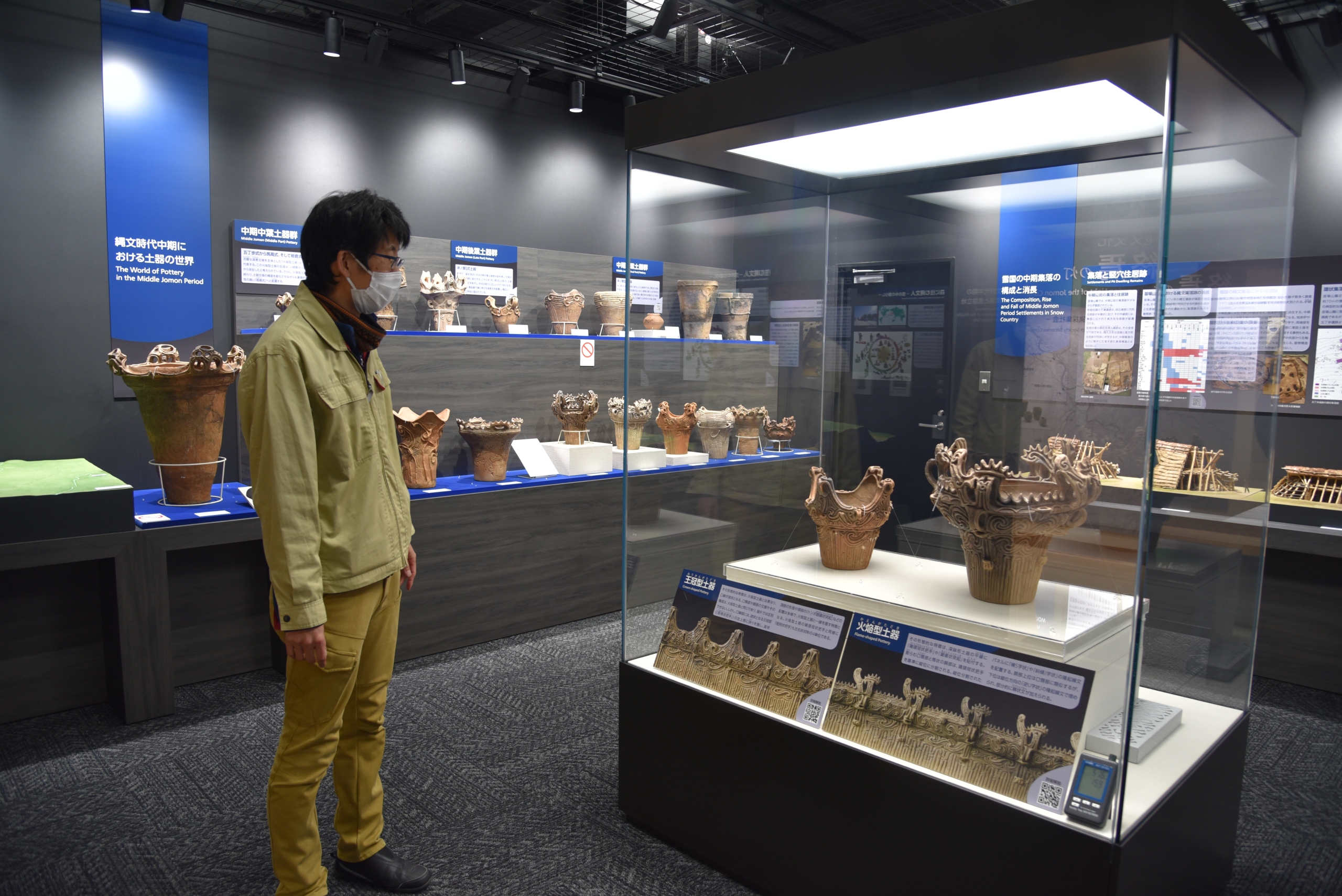
“Ordinary Jomon pottery, as its name suggests, bears cord-marked patterns, but flame-style pottery does not. Instead, clay was rolled into rope-like strips and applied to the vessel’s surface to create spiral patterns. Furthermore, the rim features four large cockscomb-shaped handles (keikanjou totte) with saw-tooth projections (kyoshijou tokki) between them,” explains Sato-san.
Flame-style pottery appeared approximately 5,000 years ago and continued for several hundred years—squarely in the Middle Jomon period. Its distribution centers on the Shinano River basin and extends across various regions of Niigata Prefecture, including Sado Island.
As is often noted, pottery with such elaborate decoration on the rim is virtually unheard of outside of Jomon pottery. Why would such impractical ornamentation—clearly inconvenient for cooking—have been applied? Sato-san offers this explanation: “Some theories suggest they were used in rituals, but the excavated vessels show evidence of actual cooking. Perhaps the people of that time held values quite different from the rationality we take for granted today.”
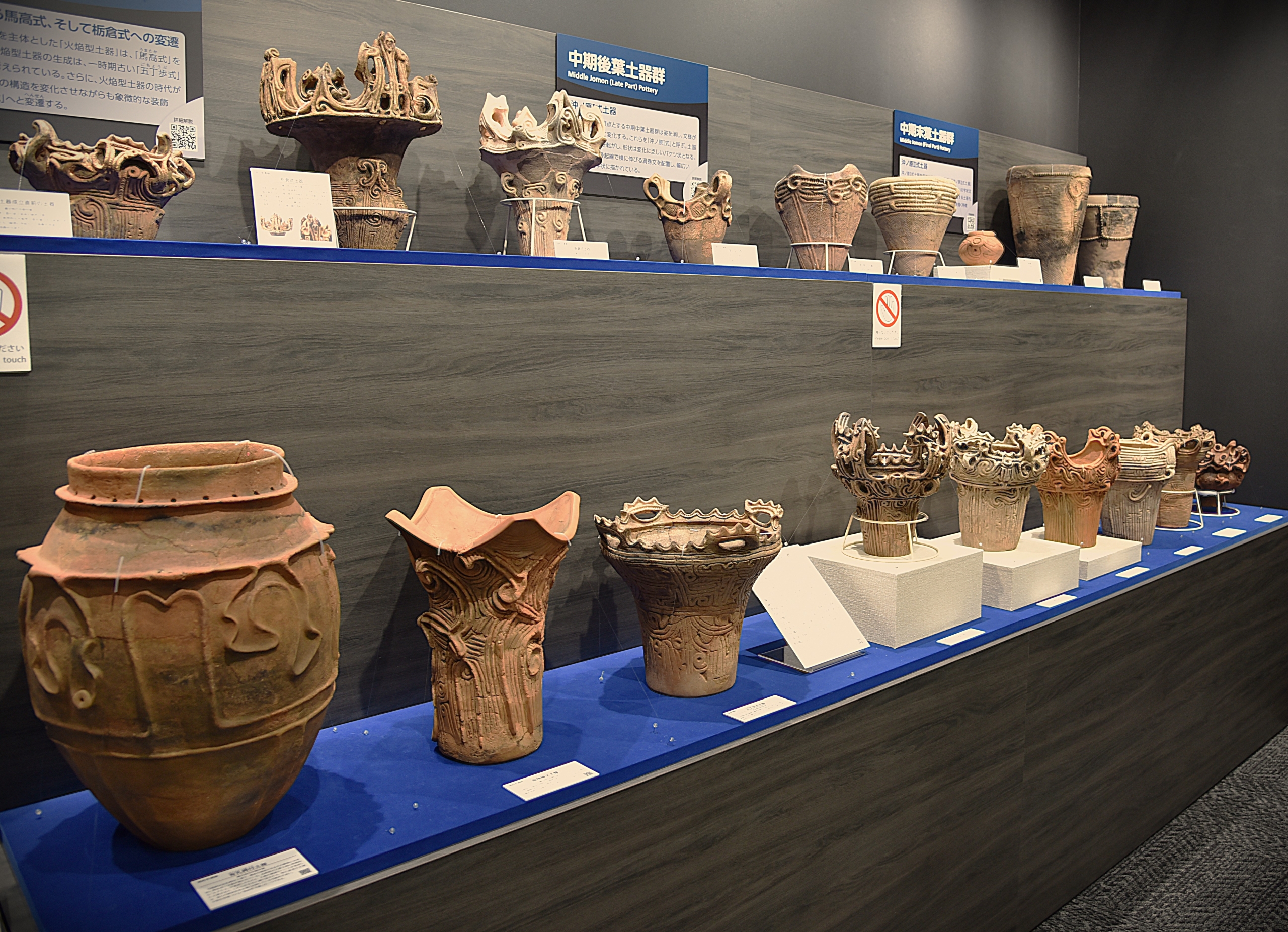
This room exhibits not only flame-style pottery, classified within the mid-Middle Jomon pottery group, but also pottery from the late Middle Jomon and terminal Middle Jomon groups. In the later phases, the excessive decoration gives way to simpler designs with greater practical functionality.
The third room displays artifacts from the Late Jomon period. While lacking the flamboyant decoration of flame-style pottery, a variety of vessel forms appear, including deep bowls, shallow bowls, and spouted vessels.
One notable exhibit in the Late Jomon room comes from the Shomengahara A Site. This site is the only large-scale Late Jomon settlement site in the town, where dwelling remains and burial sites have been discovered in abundance, making it an important site for understanding the village life and society of that era.
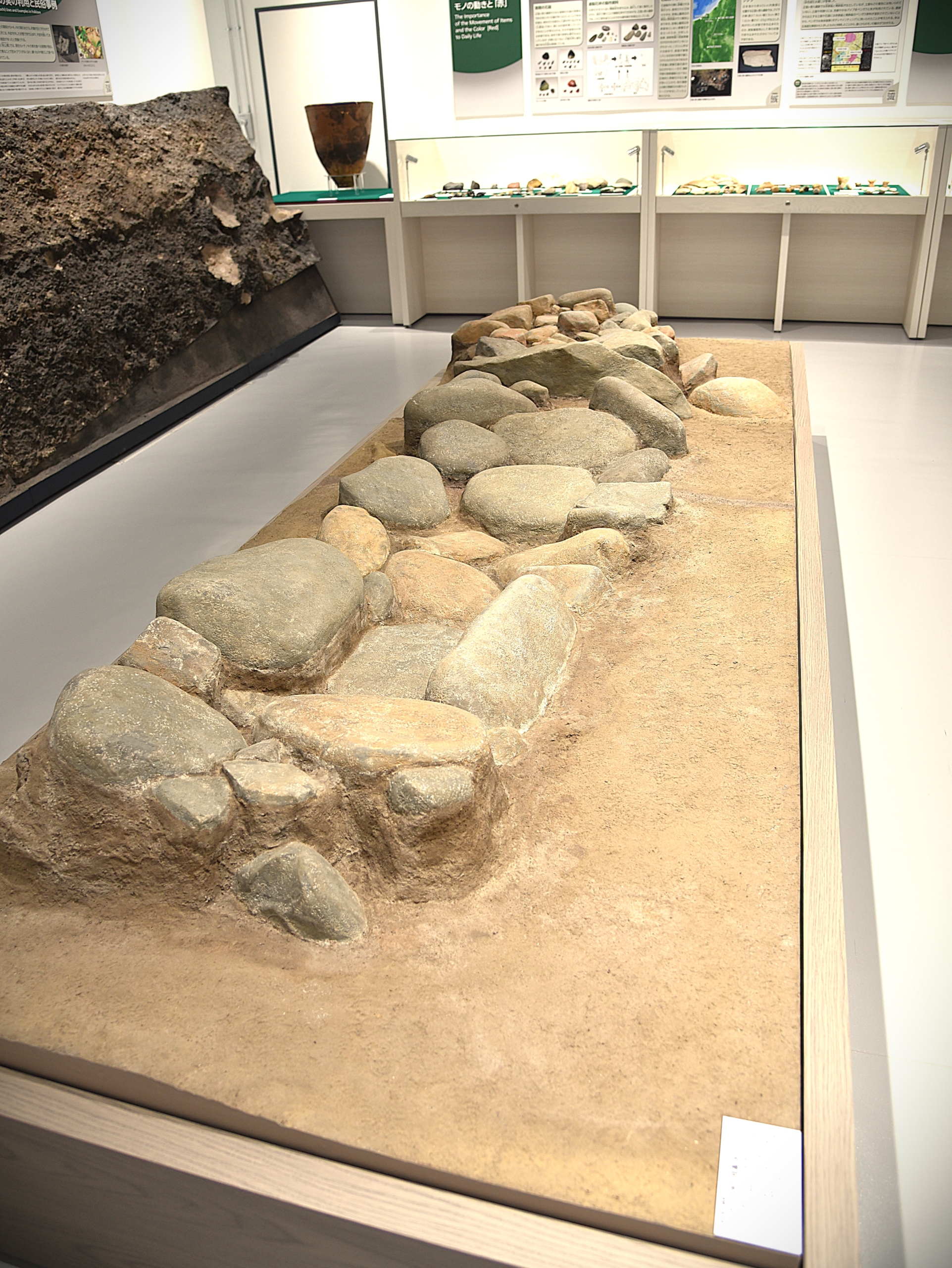
At this site, burial areas were arranged around a circular residential zone. Burials from this period can be broadly divided into two types: “flexed burial” (kutsuso), where the body was bent, and “extended burial” (shinshenso), where the body was laid out straight. A full-scale replica of an actually excavated stone coffin is placed in the center of the space.
“First, an elongated grave pit was dug, then covered from above with elongated cobblestones as a lid. Many such stone coffins were unearthed,” explains Sato-san. One can sense the spirituality of the Jomon people, who buried their dead with great care.
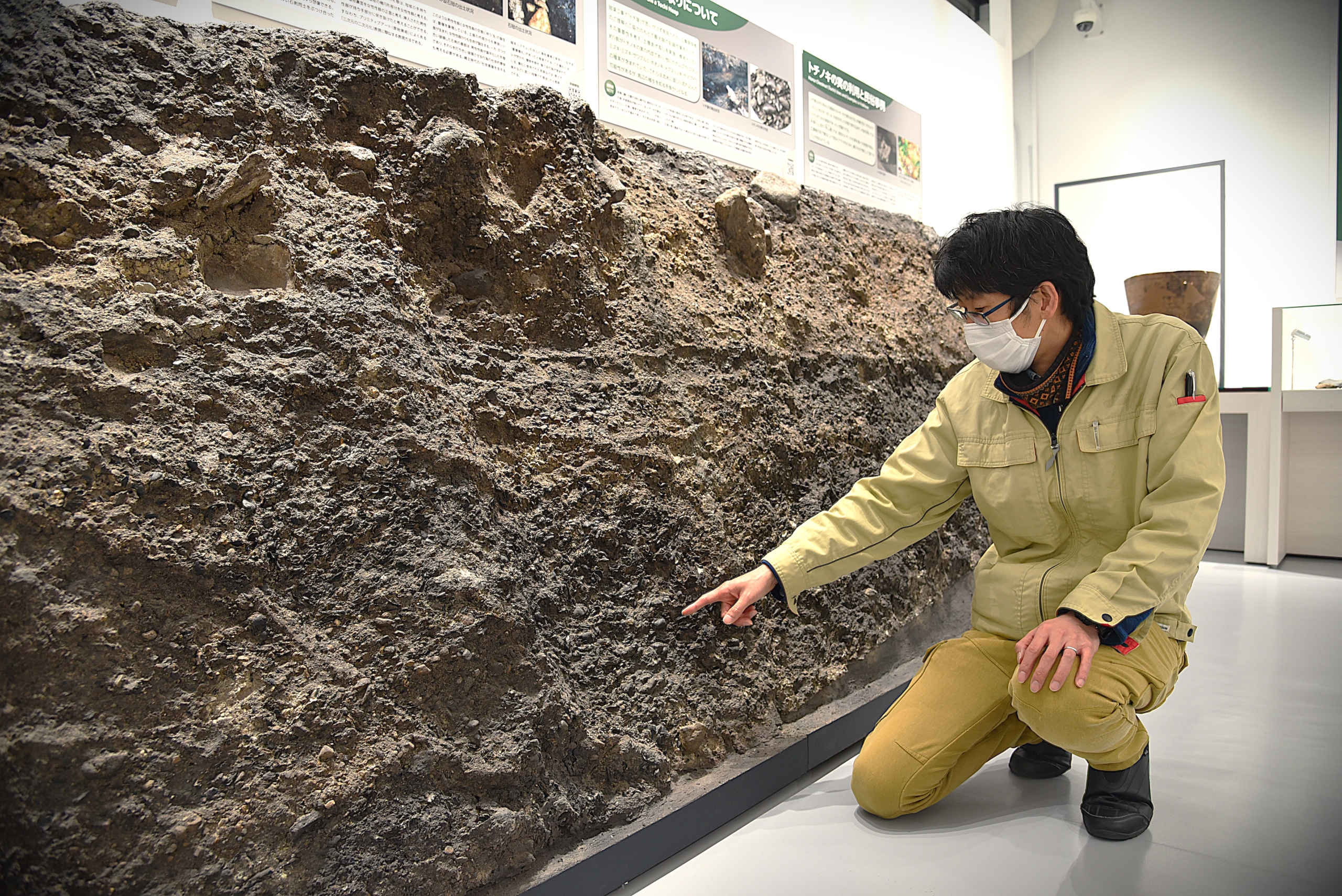
Further in, a cross-section of layered sediment is on display. “The Jomon people of that time primarily ate horse chestnuts (tochi no mi). This is an actual layer of sediment stripped from the excavation site to show the evidence,” says Sato-san, explaining that the black layer represents a massive accumulation of horse chestnuts.
Horse chestnuts keep well in storage, but their astringent taste must be removed before eating—a laborious process. “Water is essential for removing the astringency, so the presence of a nearby stream was a prerequisite. Indeed, this layer was found right beside such a stream. The settlement and the stream were inseparable, which is believed to be why the settlement remained in the same location for so long,” explains Sato-san.
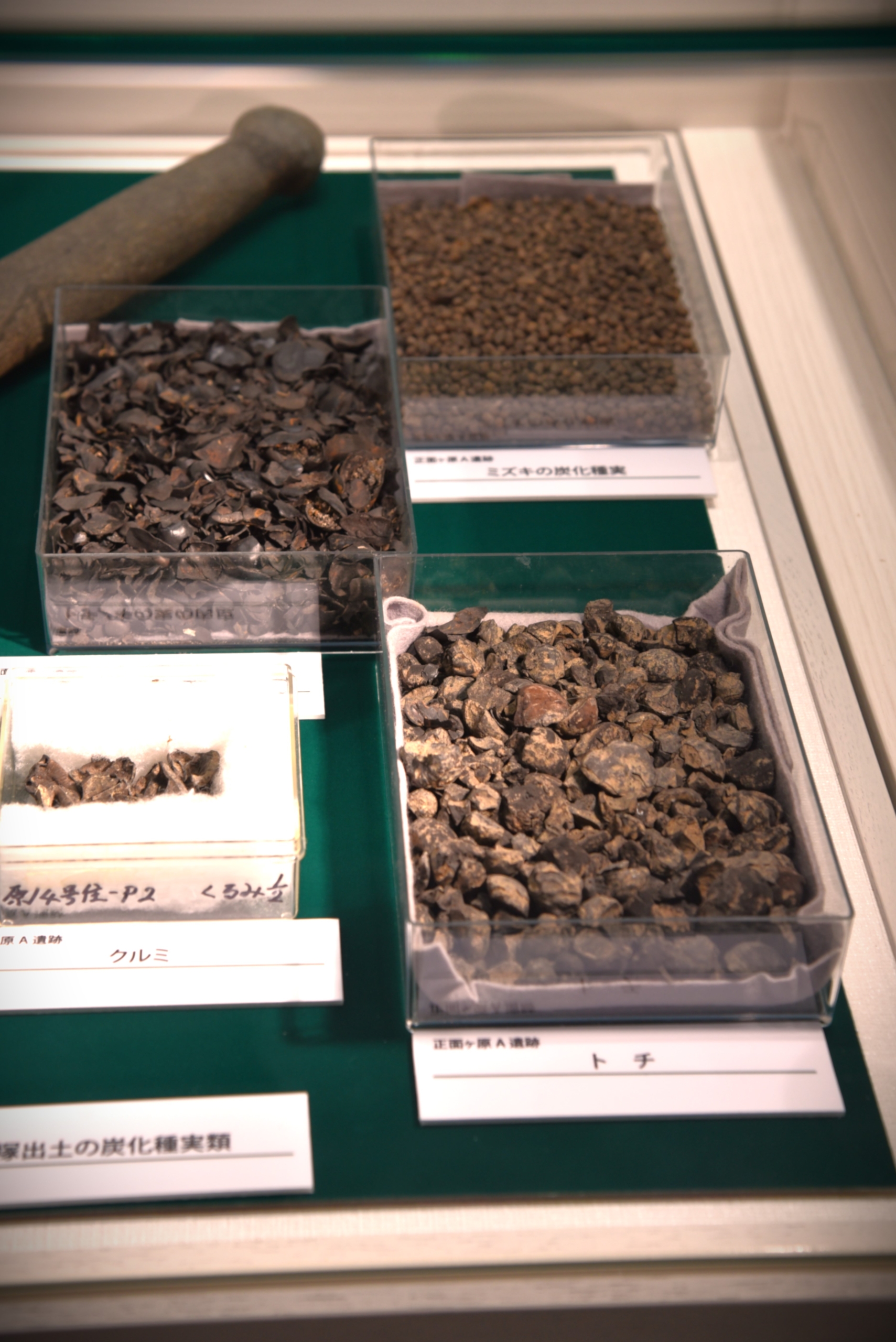
Numerous tool-like objects that seem unlikely to have been directly related to daily life—such as stone swords, stone crowns, and stone rods—have been unearthed from the surrounding area. These were presumably used in ceremonies, suggesting that daily life and ritual were closely intertwined in their culture.
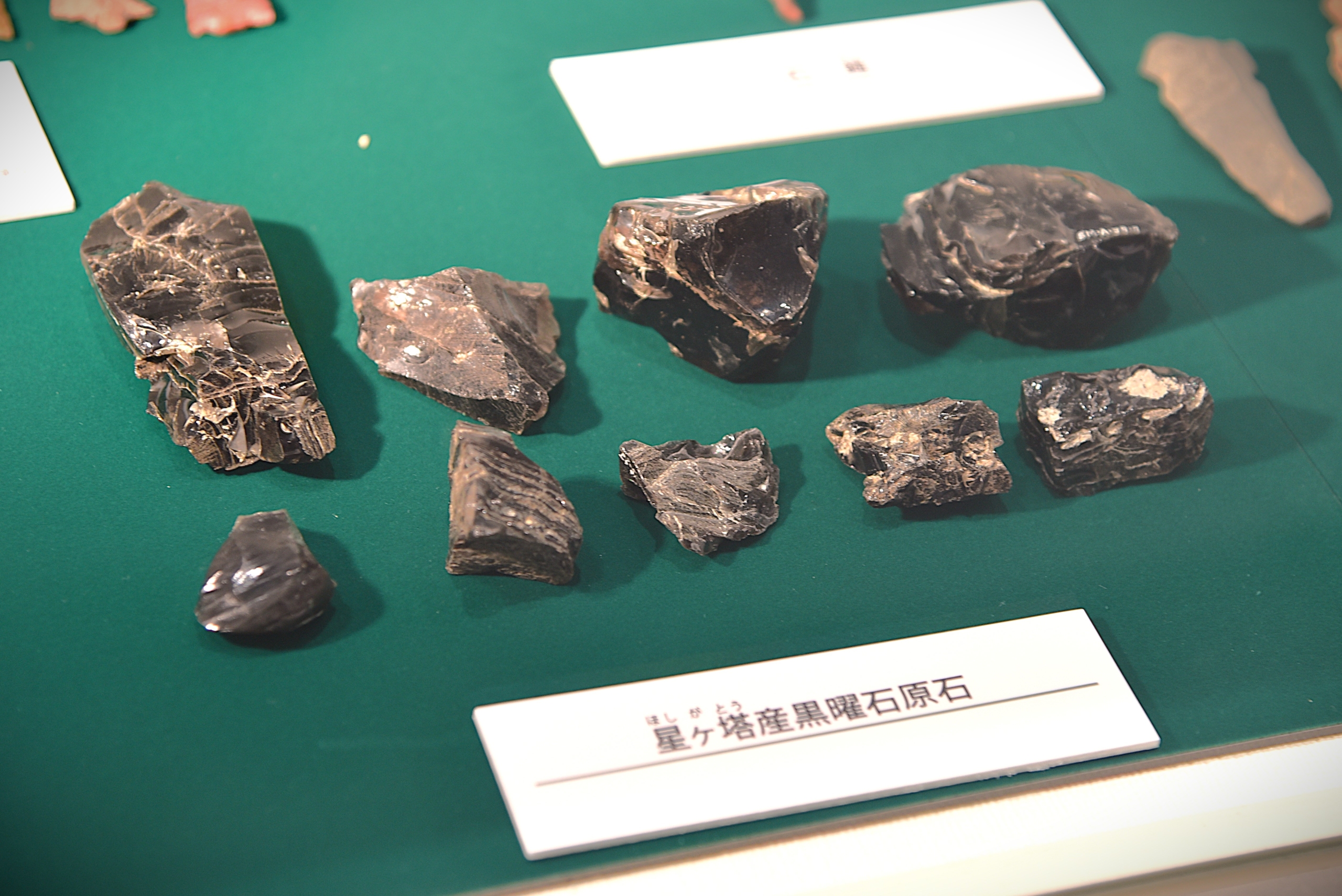
Another fascinating aspect is the movement of goods and people during the Jomon period. This space uses obsidian and serpentinite as examples. “Obsidian, one of the raw materials for stone tools, was found most abundantly in Tsunan Town at the Shomengahara A Site. However, analysis shows that the obsidian largely originated from Hoshigatou in the Chikuma River basin, in present-day Nagano Prefecture,” says Sato-san. Similarly, the serpentinite used for stone axes came from the area around present-day Itoigawa. It is clear that the Jomon people of that time engaged in active exchange of goods and people.
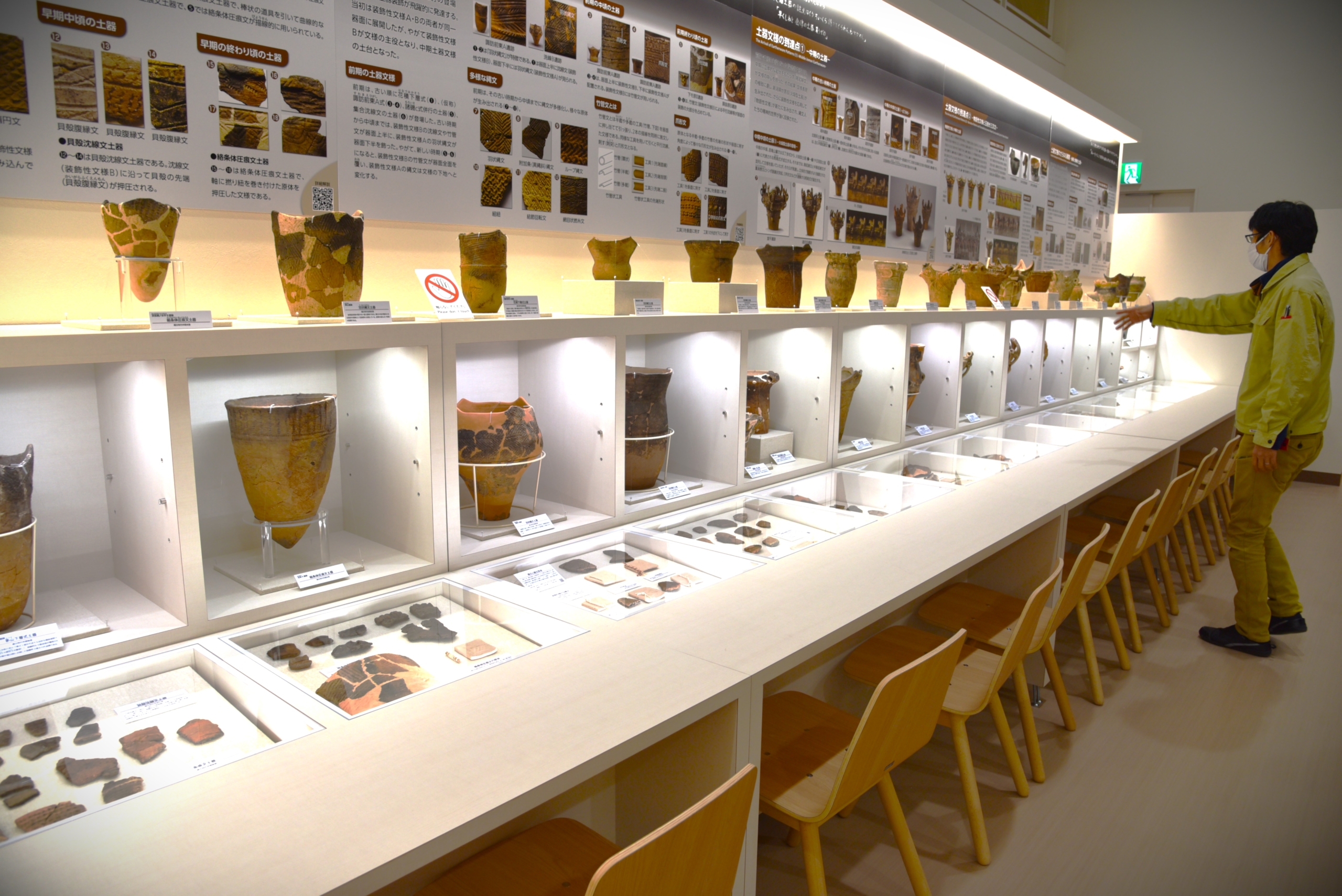
Leaving the three rooms behind, we head toward the former gymnasium. The spacious area features exhibits explaining the formation of the land and the natural environment of the region, as well as buried artifacts and materials from the Paleolithic, Jomon, and Yayoi periods through the medieval era and Edo period.
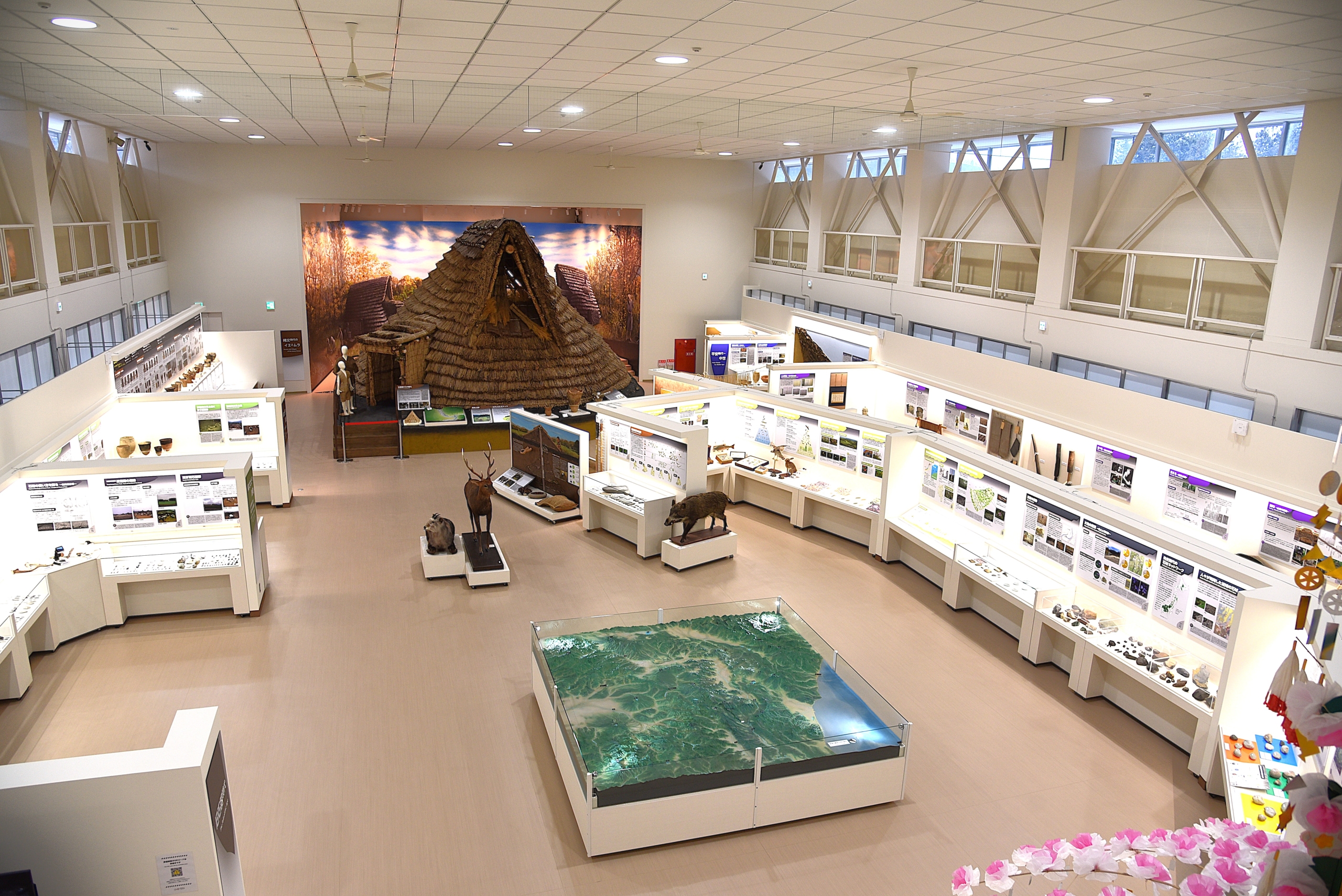
“Particularly regarding the Jomon period, we have divided it into six phases—Incipient, Initial, Early, Middle, Late, and Final—and display pottery and other buried artifacts from each era,” says Sato-san.
Chairs are placed just in front of the displayed pottery and tools, allowing visitors to sit and contemplate the exhibits at length. It must be an irresistible space for anyone who loves archaeological sites and artifacts. “Some visitors actually sit and gaze for quite a long time,” notes Sato-san. Opportunities to view genuine artifacts at such close range are not common—this alone makes the exhibition feel truly valuable.
The undisputed highlight of this space is the life-size pit dwelling standing prominently in the center. It is a reconstruction of a dwelling found at the Okinohara Site on the left bank of the Nakatsu River. The Okinohara Site is a Late Middle Jomon period site located on a high river terrace (approximately 160 meters above the riverbed) of the Nakatsu River, a tributary of the Shinano River, and features a circular settlement approximately 120 meters in diameter.
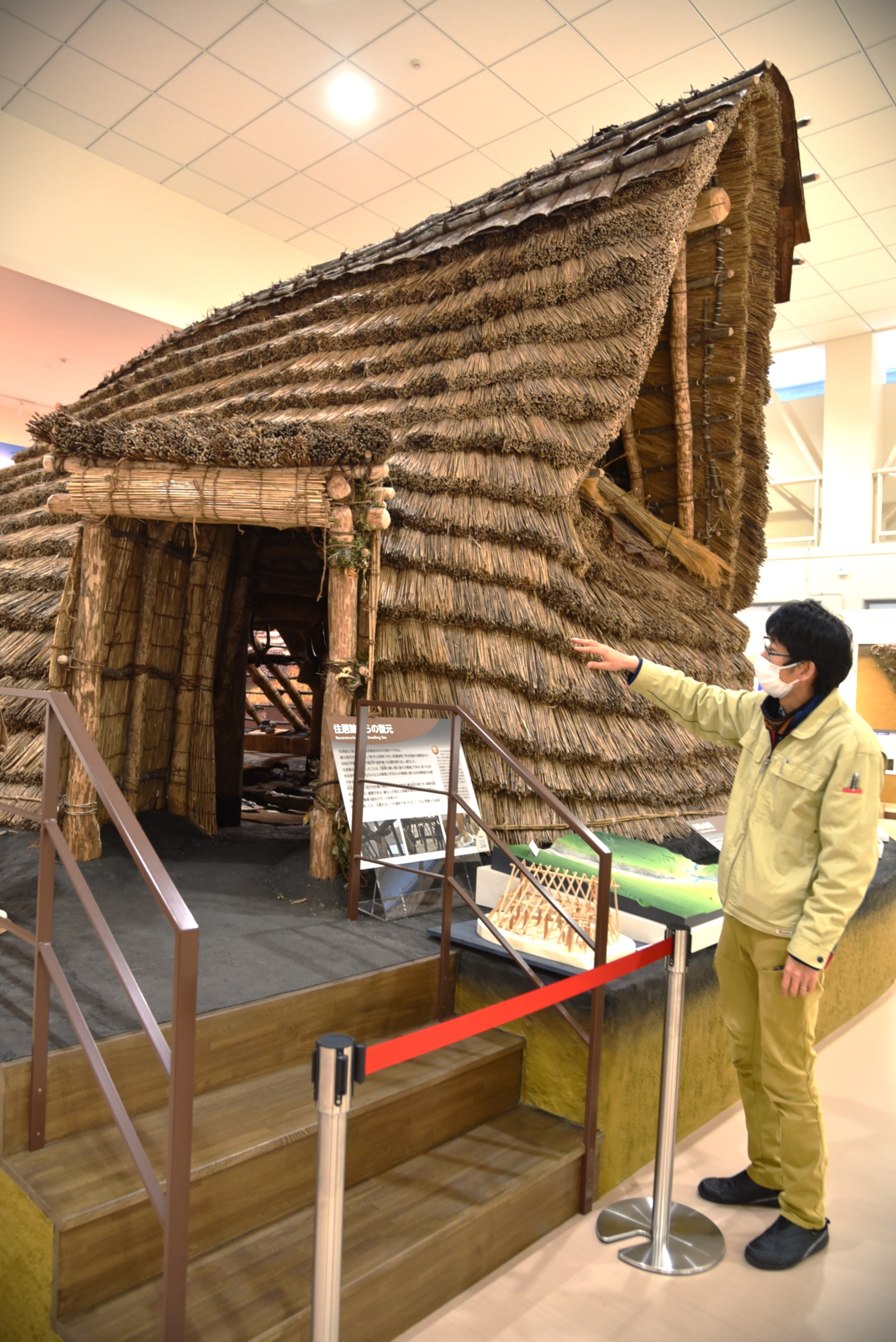
Sato-san explains while guiding us into the pit dwelling: “What we knew was the position and size of the pillars. Based on that, we reconstructed it using the building techniques of the time. A particularly important consideration was the heavy snowfall in this region. The structure had to withstand snow accumulation reaching 3 to 4 meters. That is why the roof rises steeply and sharply.”
The average height of Jomon men was said to be about 150 centimeters, so the entrance is low, requiring visitors to duck to enter. However, the interior space is surprisingly spacious—an oval shape measuring 7 meters in its longest dimension and 6 meters at its widest. The pillars are bound together with thick rope. The ceiling is open, with a hole at the very top that appears to serve as a vent.
Looking at the floor, there is an elongated oval depression in the center, outlined with small stones. “This is the hearth of that era. Small stones were laid in a mosaic pattern to line the interior, and wood was burned within. At the end of the oval, pottery was embedded, presumably used for cooking,” says Sato-san. This hearth is a faithful reproduction, cast directly at the excavation site. Smoke from the fire would rise naturally upward and be expelled through the hole in the ceiling.
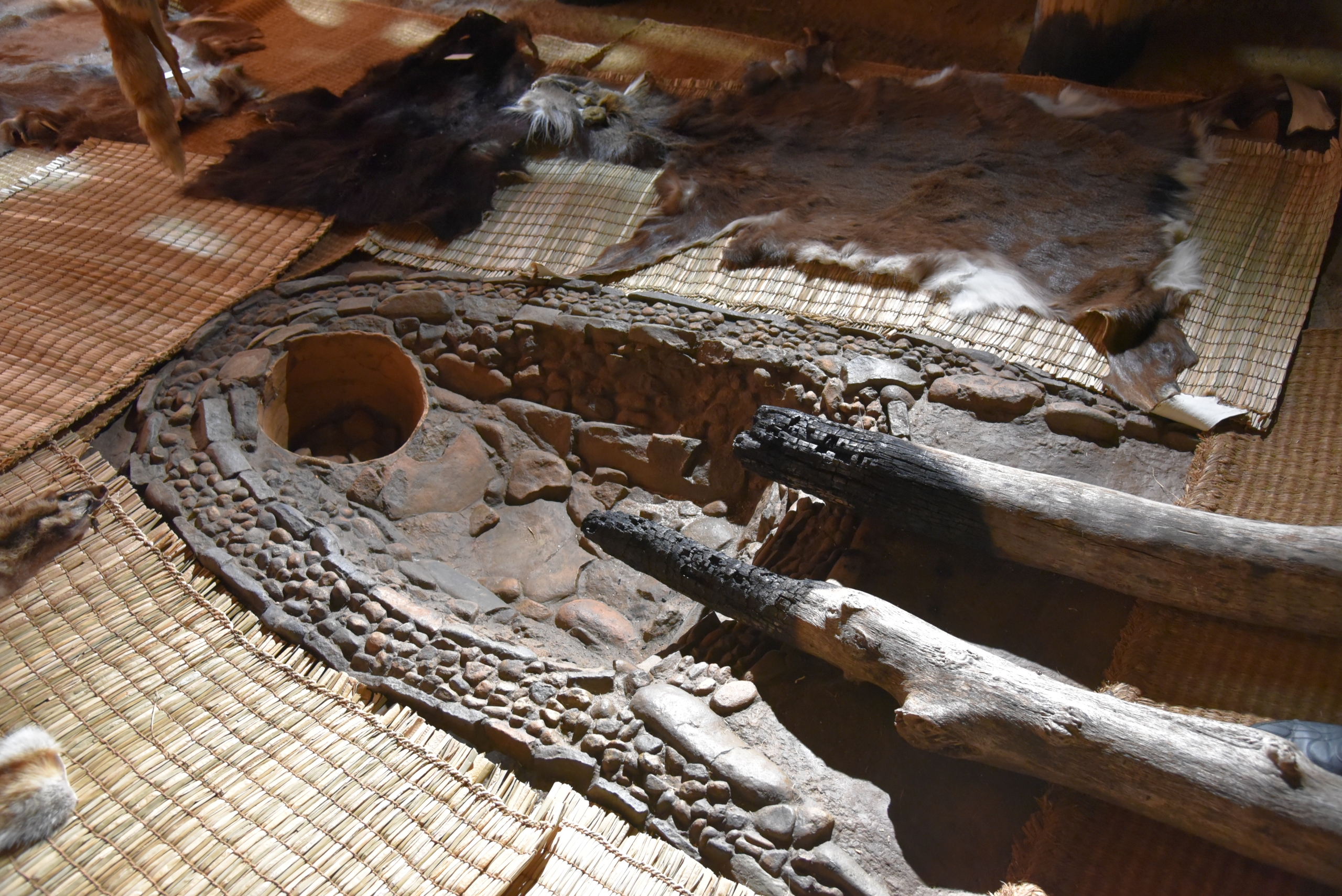
Inside the dark pit dwelling, the lives of our Jomon ancestors and their families seem to materialize across the vastness of time. Even so, one wonders how they endured life in this place through long winters and heavy snowfall.
When posed this simple question, Sato-san explains that heavy snowfall actually brought its own advantages:
“For the Jomon people of that time, snow was in fact a blessing. For one thing, when snow covered everything, it made travel by sled much easier. Normally you couldn’t transport large loads like timber through the forest, but on a sled, it was easy. Also, animal tracks remained visible in the snow, which was very advantageous for hunting.”
From a modern perspective, heavy snowfall is a tremendous obstacle. But from the standpoint of Jomon people’s way of life, the advantages were significant. Moreover, the massive snowfall would become snowmelt water in spring, becoming the source that nourishes plants, animals, and ultimately people.
For Jomon people, the heavy snowfall deep in the mountains was a paradise where everything they needed could be found.
This is precisely why people continued to inhabit this land—where the Kiyotsu River, Nakatsu River, and Shikumi River flow into the Shinano River—from the Paleolithic period through the Jomon and Yayoi periods, and on through the medieval and early modern eras. And that immense accumulation of history has been preserved as a wealth of archaeological sites.
Incidentally, the former gymnasium space also includes an exhibition area on the nature and daily life of Akiyamago. It is based on “Akiyama Kiko” (Journey to Akiyama), written by Suzuki Bokushi, who traveled to this region at the end of the Edo period. Additionally, the first floor features an introduction booth for the Naeba Sanroku Geopark and a community space.
“As a facility where visitors can experience the rich accumulation of Tsunan’s culture from the Paleolithic through the early modern period, we sincerely hope everyone will come visit Umorea,” says Sato-san. The town also has another well-known facility, “Najomon,” which offers hands-on experiences. We recommend visiting Umorea to encounter the many buried cultural properties, then heading to Najomon for experiential learning activities such as pottery making and Angin weaving.
Tsunan Buried Cultural Properties Center “Umorea”
Address: 2348 Nakafukami-ko, Tsunan Town, Nakauonuma District, Niigata Prefecture 949-8311
TEL/FAX: 025-755-7011
E-mail: info@tsunan-maibun.jp
Website: https://tsunan-maibun.jp/category/news/
Hours: 9:00–17:00 (Last admission: 16:30)
Closed: April 1–November 30 → Mondays (or the following weekday if Monday is a holiday)
December 1–March 31 → Saturdays, Sundays, holidays, and year-end/New Year holidays
Admission: Free
TextTaiki Honma



©2026 Tourism Tsunan